 Tofino City Guide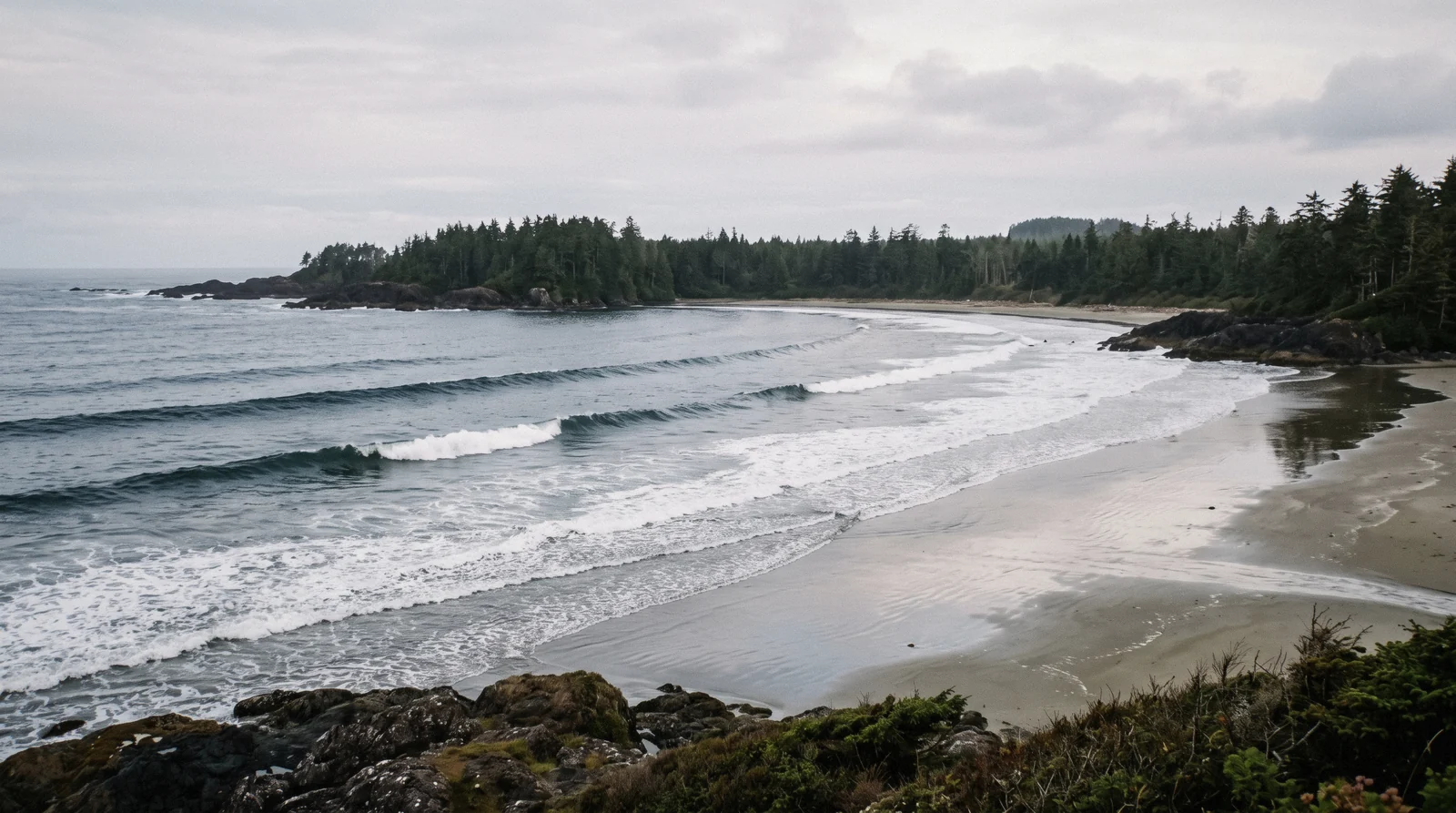
Tofino Surf Report: How To Check The Swell Before You Paddle Out
There is no live Tofino surf report on this page. This guide does something more useful. It shows you exactly where to check the swell yourself, which official forecast zone covers this coast around Tofino, and what the conditions mean at each beach. By the end you will know how to read a marine forecast, which beach fits your skill level, and what to wear in water that sits between 7°C and 14°C.
Quick answer How to check today's surf conditions in Tofino
There is no live surf report here. Waves on this coast can reach up to 20 feet (6 m) in storm season. Check Environment Canada's West Coast Vancouver Island South marine forecast before any session.
Key takeaways
- Learn the scene in the Tofino surfing guide
- Pick your break from Cox Bay, the closest and most forgiving beach
- Book surf lessons in Tofino if you are starting out
Three Ways To Check Conditions
Three ways to check conditions before you paddle out, and the limits of each. No single source tells the whole story, so most surfers cross-check at least two of these before a session.
| Where You Check | What It Shows | Limits | Best For |
|---|---|---|---|
| Environment Canada marine forecast (West Coast Vancouver Island South) | Official wave or sea height in metres, wind and visibility for the Tofino and Ucluelet coast | Issued at set times, not continuous. Reports seas in broad ranges, not break-specific wave faces | A safe, official read on general sea state and wind before you drive out |
| A dedicated surf-forecast website or app | Break-level swell size, period and wind that surfers actually use to pick a session time | This site does not reproduce those numbers, and third-party models can drift from reality | Timing a session to a specific beach and tide |
| Asking a local surf shop | Current, on-the-ground read of which beach is working, plus rental gear if you need it | Staff opinions vary, and advice depends on who is behind the counter | Visitors renting a board who want a same-day human answer |
Figures current in Q3 2026.
How To Check The Swell Yourself
The Official Source: Environment Canada's Marine Forecast
The official marine forecast zone covering the Tofino and Ucluelet coast is West Coast Vancouver Island South, published by Environment Canada. It reports wave and sea height in metres, so a typical line might read seas of 2 to 3 metres. Alongside wave height you get wind and visibility, which on this coast often matter more than the swell itself. Offshore wind cleans a wave up. Onshore wind turns it to soup.
Two things to understand about this forecast. First, it is issued at set times rather than updated continuously, so the reading you see may be a few hours old by the time you check it. Second, it describes general sea state for the whole zone, not the wave at one specific break. A forecast of 2 metres tells you the ocean is working. It does not tell you that Cox Bay is cleaner than Wickaninnish this morning.
Be Honest About What This Page Is
This site runs no live buoy or swell-height feed of its own. Any page claiming to show today's exact wave height in Tofino without a live data source is guessing. The honest answer is that you should check Environment Canada's marine forecast directly, or use a dedicated surf-forecast service, before every session.
Those are the two tools surfers here actually use. This page explains how to read them and what the numbers mean for each beach. It does not replace them.
Turning Metres Into A Plan
Environment Canada reports in metres, which trips up visitors used to feet. Rough conversions help. 1 metre is about 3.3 feet, so seas of 1 to 2 metres is roughly waist to head high on the face, and seas of 3 metres and up is a big, powerful day. In fall and winter the wind over open ocean can build waves up to 20 feet (6 m) here, because there is no landmass between Tofino and Japan to slow the swell down.
When the official forecast shows seas in that range, it is a day for experienced surfers only, and many will simply watch from the beach. That is the storm watching side of Tofino, and it is spectacular in its own right.
Based on Environment Canada's marine forecast for West Coast Vancouver Island South, read 2026-09-23.
The Season, Not A Forecast
Winter Is For Experienced Surfers
Parks Canada is blunt about the split. Winter brings more challenging conditions suited to experienced surfers. Summer has moderate waves better suited to people learning.
This follows directly from the geography. Storm season runs through fall and winter, and the exposed coast lets wind build waves up to 20 feet (6 m). Summer swell is smaller, softer and far more forgiving.
If you are booking a first lesson, it will almost certainly be in summer conditions, and that is the right call.
The Best Month Question, Answered Honestly
People ask for the single best month to surf in Tofino. The honest answer is that the best month depends on your skill level. For learners, the summer months offer moderate waves and the most manageable conditions.
For experienced surfers, winter delivers the powerful, challenging surf that Parks Canada describes, along with cold water and storms. Neither is objectively better. A winter month with 20-foot (6 m) seas is the worst possible time for a beginner and a great one for a seasoned local.
Ask instead what your own level is, then pick the season that matches it.
Water Temperature Year Round
One thing that does not change much by season is the water. Parks Canada puts water temperature at these beaches between 7°C and 14°C year round. That is cold every month of the year, and it shapes everything about surfing here, from the wetsuit you need to how long a sensible first session lasts.
Plan for cold water even on a warm summer day. A sunny August afternoon on the sand can still mean a 4mm wetsuit in the water, and a surf report that reads mild in air temperature says nothing about what the ocean itself is doing. Treat the water temperature range as a constant to plan around, separate from whatever the forecast says about wind, sun or swell size on a given day.
Source: Parks Canada, surfing at Pacific Rim.
Which Beach For Which Swell Size
Six Named Surf Beaches
Parks Canada names six surf beaches inside the Long Beach Unit of Pacific Rim National Park Reserve: Wickaninnish Beach, Long Beach, Cox Bay, Florencia Bay, Green Point and Combers Beach. All are unsupervised. No lifeguards or surf guards are on duty at any of them, and each has a hazard map showing no-go zones and rip currents.
Read the hazard map for your beach before you get in. The full rundown is on Tofino surfing.
Matching The Beach To The Day
When the report shows a modest swell, Cox Bay is the classic choice. It is the closest surf beach to Tofino village and the most beginner-friendly, which is why most lessons happen there. On small summer days it is as gentle as this coast gets.
When the report shows a large winter swell, experienced surfers look to Wickaninnish Beach, which picks up the biggest waves of any beach here. There is a viewing deck at the Kwisitis Visitor Centre if you would rather watch that size than surf it.
For something in between, Long Beach lives up to its name. It is a long, forgiving stretch that spreads a swell out and gives everyone room, which makes it a steady choice on average days. On the biggest storm days, none of these are beginner water, and the right move is to stay on the sand.
Beach character per Tofino surfing and Parks Canada's named surf beaches.
Gear For Whatever The Report Says
The Wetsuit Rule
With water between 7°C and 14°C, Parks Canada recommends at minimum a 4mm wetsuit in summer and a 5mm wetsuit in winter. Booties, gloves and a hood are highly recommended, and in winter they are not optional if you plan to stay out longer than a few minutes. If you are renting, shops stock winter-weight suits, so say what season you are surfing and let them fit you properly.
Parks Canada also asks surfers to use a leash, strongly advises a surf-specific helmet, and publishes a Surfer's Code: do not drop in on another surfer's wave, paddle wide around others catching waves, keep control of your board, and communicate with other water users. A helmet sounds excessive until you see how shallow and rocky some of these breaks get on a big day.
Renting Versus Bringing Gear
If you are flying into Tofino, rent. Local shops carry soft-tops and hard-tops and fit you on the spot, and staff will tell you which beach is working that morning, which is worth as much as the board. Lessons usually include gear, so if you are starting out, book a lesson and let the instructor handle equipment and beach choice.
Wetsuit guidance per Parks Canada, Pacific Rim National Park Reserve.
Tofino Surf Report FAQ
Is it good to surf in Tofino today?
This page cannot tell you, because it carries no live feed. The honest way to check is Environment Canada's official marine forecast for the West Coast Vancouver Island South zone, which reports sea height in metres along with wind and visibility. It is issued at set times rather than continuously, so also ask a local surf shop, which will know what the beaches are actually doing this morning.
What is the best month to surf in Tofino?
There is no single best month. Per Parks Canada, winter brings more challenging conditions for experienced surfers, while summer has moderate waves better suited to learners. The best month for you depends on your skill level: summer for a first lesson, winter if you are experienced and chasing serious swell, which can reach up to 20 feet (6 m) during storm season.
How good is surfing in Tofino?
It is a serious surf destination with six named surf beaches in the Long Beach Unit alone: Wickaninnish Beach, Long Beach, Cox Bay, Florencia Bay, Green Point and Combers Beach. Summer offers moderate waves for learning. Winter offers large, powerful surf for experienced surfers, driven by an exposed coast that lets wind build waves up to 20 feet (6 m). All beaches are unsupervised, with no lifeguards on duty.
Is Tofino considered the surfing capital of Canada?
No claim to that title appears in the sourced material for this guide, so we will not repeat it as fact. What is sourced is this: an exposed open-Pacific coast with no landmass between Tofino and Japan, six named surf beaches in the national park reserve, a winter swell that can reach 20 feet (6 m), and an established scene of surf schools and shops. Call it what you like based on that.
Where can I check the Tofino marine forecast?
Environment Canada publishes the official marine forecast for the West Coast Vancouver Island South zone, which covers the Tofino and Ucluelet coast. It reports wave and sea height in metres, for example seas of 2 to 3 metres, alongside wind and visibility. It is issued at set times, so check the latest issue shortly before your session rather than the night before.
Do I need a different wetsuit for winter surfing in Tofino?
Yes. Parks Canada recommends at minimum a 4mm wetsuit in summer and a 5mm wetsuit in winter, with booties, gloves and a hood highly recommended. Water at these beaches runs between 7°C and 14°C year round, so even the summer suit is a proper cold-water setup.
Nearby
Tofino Surfing
The full guide to surfing in Tofino, from the beach scene to skill levels and the Surfer's Code.
Cox Bay
The closest surf beach to Tofino village and the most beginner-friendly break on this coast.
Tofino Surf Lessons
How to book a lesson, what it costs and what to expect from surf schools in Tofino.
Storm Watching In Tofino
When the swell is too big to surf, watch it instead. Season, viewpoints and safety rules.
A Calmer Way Onto The Water
If the marine forecast reads too big for your comfort, there are sheltered ways to enjoy this coast that do not ask you to paddle into the swell.
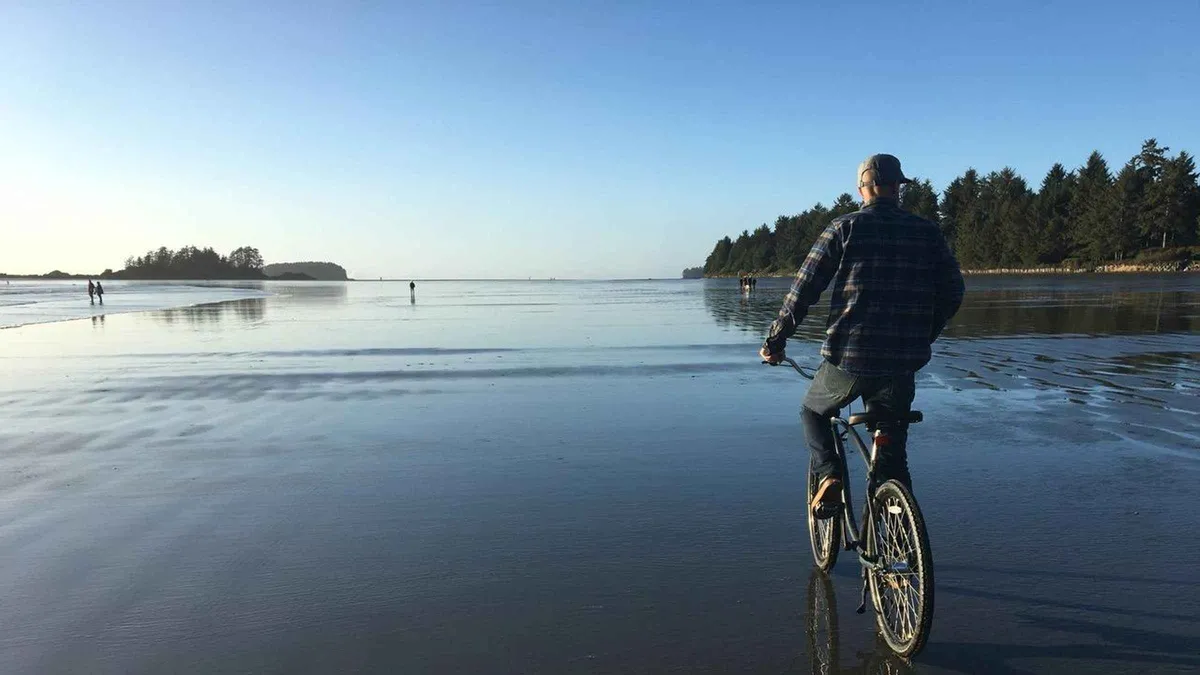 from $106.00
Tofino: Bike & Hike Coastal Adventure
A 3-hour trip that starts with a beach-cruiser bike ride along Tofino's surf beaches, then swaps to a hike out to Penniger Point for Pacific views. Jeans are not allowed and it is not suitable for children under 5 or anyone who cannot ride a bike.
Check AvailabilityPrices, ratings and details are the platform's own. Dollar figures are the listed prices. The platform bills in your account's currency.
Watch And Learn To Read A Surf Report
How To Read The Surf Forecast (Everything You NEED To Know)
A general guide to reading a surf forecast, the same skill this page teaches for the Tofino coast.
Video: Dan HarmonScoring Good Surf Conditions At Long Beach Near Tofino, BC
Real conditions at Long Beach, one of the six named beaches compared above.
Video: Swell TofinoSurf Forecasts For Beginners: Reading Swell Period
A beginner explainer on swell period, one of the figures a dedicated forecast service adds beyond the official marine forecast.
Video: T&C Surf DesignsPrices, hours and terms are set by the venue or operator and confirmed at checkout.
We may earn a commission if you book through one of our links, at no extra cost to you. Full affiliate disclosure