 Tofino City Guide
Tofino Botanical Gardens: Visiting Naa'Waya'Sum Coastal Indigenous Gardens
If you searched for Tofino Botanical Gardens, you are in the right place. The 12-acre site at 1084 Pacific Rim Hwy is still here, still open to visitors, and still full of trails, art and coastal forest. What has changed is the name and the purpose. The gardens now operate as the Naa'Waya'Sum Coastal Indigenous Gardens, part of the Clayoquot Campus, in the Ha'houlthee (traditional territory) of the Tla-o-qui-aht Ha'wiih. The site is managed by the IISAAK OLAM Foundation and owned by the Clayoquot Indigenous Conservation Innovation Centre (CICIC), a satellite of the Pacific IPCA (Indigenous Protected and Conserved Areas) Innovation Centre. This page gives you the record straight and then the practical detail: what a day pass costs, what is on site, and what to know before you go. For the wider picture, start with our things to do in Tofino guide.
Quick answer Quick answer: cost, access and current status
A Single Day Pass costs US$7.10 (C$10.00), and admission is free for Nuu-chah-nulth citizens and children ages 0-12. The site at 1084 Pacific Rim Hwy now operates as the Naa'Waya'Sum Coastal Indigenous Gardens, part of the Clayoquot Campus, and a pass covers the 12 acres of gardens and trails. At the time of our latest check the gardens and cafe were listed as closed for the season, with no reopening date published by the operator, so confirm before you set out. You can buy tickets on arrival or show proof of purchase at check-in, and no advance booking is stated as required. For more on the town around the gardens, see the Tofino city guide or start planning with our trip planner.
Key facts
Opening hours
| In season (dates not published) | 09:00–dusk |
|---|
Closed Listed as closed for the season at our latest check; no reopening date published.
Admission
- Adult
- US$7.10 (C$10.00) Single Day Pass
- Reduced
- US$56.78 (C$80.00) Annual Adult Membership, 50% off after Labour Day
- Free
- Nuu-chah-nulth citizens and children ages 0-12
Planning it
- Time needed
- Not stated by the operator. Our estimate: 45-90 minutes for the trails, longer with a guided program
- Address
- 1084 Pacific Rim Hwy, Tofino, BC V0R 2Z0
From Tofino Botanical Gardens To Naa'Waya'Sum
The name on the sign changed, and so did the story the site tells. Here is what happened and who runs it now.
What the site is now
The attraction long marketed as Tofino Botanical Gardens is now the Naa'Waya'Sum Coastal Indigenous Gardens. It sits within the Clayoquot Campus at 1084 Pacific Rim Hwy, in the Ha'houlthee (traditional territory) of the Tla-o-qui-aht Ha'wiih. Management sits with the IISAAK OLAM Foundation, and ownership sits with the Clayoquot Indigenous Conservation Innovation Centre, known as CICIC. CICIC is a satellite of the Pacific IPCA Innovation Centre, which works on Indigenous Protected and Conserved Areas. In plain terms, the site has moved from a private garden attraction to an Indigenous-led campus focused on conservation and knowledge sharing.
The old website domain no longer belongs to the gardens, which is why older listings, prices and hours you may find online no longer apply. If you have an old guidebook entry for Tofino Botanical Gardens, treat the contact details and opening information as out of date. The current operator publishes information through the Clayoquot Campus, and that is the source this page follows. For orientation once you are in town, our Tofino map shows where the gardens sit on the Pacific Rim Highway.
What the name means
Naa'Waya'Sum references traditional Nuu-chah-nulth cedar benches. These benches were used for intergenerational knowledge sharing, a place where Elders and younger generations sat together and learning passed along the row. The name signals what the gardens are for now: a place where visitors learn about Nuu-chah-nulth art, culture and knowledge systems, alongside the coastal forest and shoreline setting the site has always had.
That learning focus shapes the whole visit. Guided tours, talks and cultural programming are offered in addition to self-guided trail access, so you can choose a quiet walk on your own or a structured visit with interpretation. The 12 acres remain open to everyone, and admission is free for Nuu-chah-nulth citizens and for children ages 0 to 12. If the Indigenous art and culture strand of the site interests you, pair a visit with the Roy Henry Vickers Gallery in town, which shares that focus from a different angle.
Why This Matters On This Coast
The rebrand did not happen in isolation. Tofino sits in Tla-o-qui-aht territory, and the wider Clayoquot Sound around it is shared by the Tla-o-qui-aht, Ahousaht and Hesquiaht First Nations. Clayoquot Sound became a UNESCO biosphere region in February 2000, the seventh in Canada, recognising the area's ecological significance alongside its long Indigenous history. A garden attraction moving from private ownership to an Indigenous-led conservation and cultural centre fits that same direction: land and knowledge held closer to the nations whose territory this always was.
For a visitor, that context is worth carrying into the visit. This is not simply a rebranded tourist attraction with a new coat of paint. It is a working campus with a stated purpose in Indigenous-led conservation, and the trails, the cafe and the carving studio all sit under that purpose rather than beside it. Reading the on-site interpretation, where it is posted, is part of what a visit here is for.
Hours, Passes And What It Costs
Current pricing is simple. A day pass covers the gardens and trails, a membership covers the year, and two groups get in free.
Day passes and memberships
A Single Day Pass costs US$7.10 (C$10.00). The operator's own listing sells the day pass in a window running from 1 September 2026 to 1 May 2027, which matches a season that runs through the fall, winter and spring. An Annual Adult Membership costs US$56.78 (C$80.00) and covers 1 April 2026 to 31 March 2027. The membership includes a 15% discount at the on-site cafe, and it is discounted 50% if you buy it after Labour Day, which brings the second-half price down considerably for anyone planning repeated visits.
Admission is free for Nuu-chah-nulth citizens and for children ages 0 to 12. A day pass or membership gives access to the 12-acre gardens and trails. Beyond self-guided access, the campus offers guided tours, talks and cultural programming, and separate arrangements may apply to those. If you are timing a trip around the weather, our guide to the best time to visit Tofino and our page on Tofino weather cover the seasonal patterns.
Tickets, the seasonal closure and contacts
Tickets are bought on arrival, or you can show proof of purchase at check-in. No advance booking is stated as required, so you do not need to plan your visit around a reservation slot. If the gates are staffed, you simply arrive and pay.
One important caveat: at the time of our latest check, the gardens and the cafe were listed as closed for the season. The operator has published no reopening date. This is a seasonal closure rather than a permanent one, but you should confirm current status directly before you build a day around it. The contact details are the phone number (236) 233-2518 and the email address [email protected]. The address is 1084 Pacific Rim Hwy, Tofino, BC V0R 2Z0.
A note on what is not published: the operator does not state a founding year for the original Tofino Botanical Gardens, does not publish a count of plant species on site, and has not given an exact reopening date. We will not invent those figures. For nearby walking options that stay open year-round, see the Rainforest Trail and Long Beach.
| Ticket | Price | Notes |
|---|---|---|
| Single Day Pass | US$7.10 (C$10.00) | Sold from 1 September 2026 to 1 May 2027. Covers the 12 acres of gardens and trails. |
| Annual Adult Membership | US$56.78 (C$80.00) | Runs 1 April 2026 to 31 March 2027. Includes 15% cafe discount. 50% off if bought after Labour Day. |
| Nuu-chah-nulth citizens | Free | Free admission on presentation at check-in. |
| Children ages 0-12 | Free | Free admission with a paying adult group. |
What To Bring
Nothing in the operator's own information sets a dress code or a gear list, so treat this as general coastal advice rather than a published rule. Tofino's climate runs wet for most of the year, with the heaviest rain between October and March, detailed on our Tofino weather page. A waterproof layer and closed shoes suit a garden and trail visit at almost any time of year, since paths through a coastal forest hold moisture even on a dry day. Because the site sits outdoors and largely uncovered beyond the cafe building, a visit in the wettest months rewards checking the forecast first. If rain rules out the gardens on a given day, our rainy day Tofino guide lists indoor alternatives nearby.
Bring cash or a card for the gate, since the ticket process is pay on arrival rather than a pre-booked, pre-paid entry. If you are staying at the IISAAK Ecolodge on site, plan your gardens and trail time around your check-in rather than a separate paid entry, though the operator's own site should confirm exactly how lodge guests and day visitors are handled.
Prices, windows and free-admission groups come from the operator's own Clayoquot Campus listing. At the latest check the gardens and cafe were listed as closed for the season with no reopening date published.
What's On The 12 Acres
The gardens and trails are the core of a visit, but the campus around them adds a cafe, an ecolodge and a working carving studio.
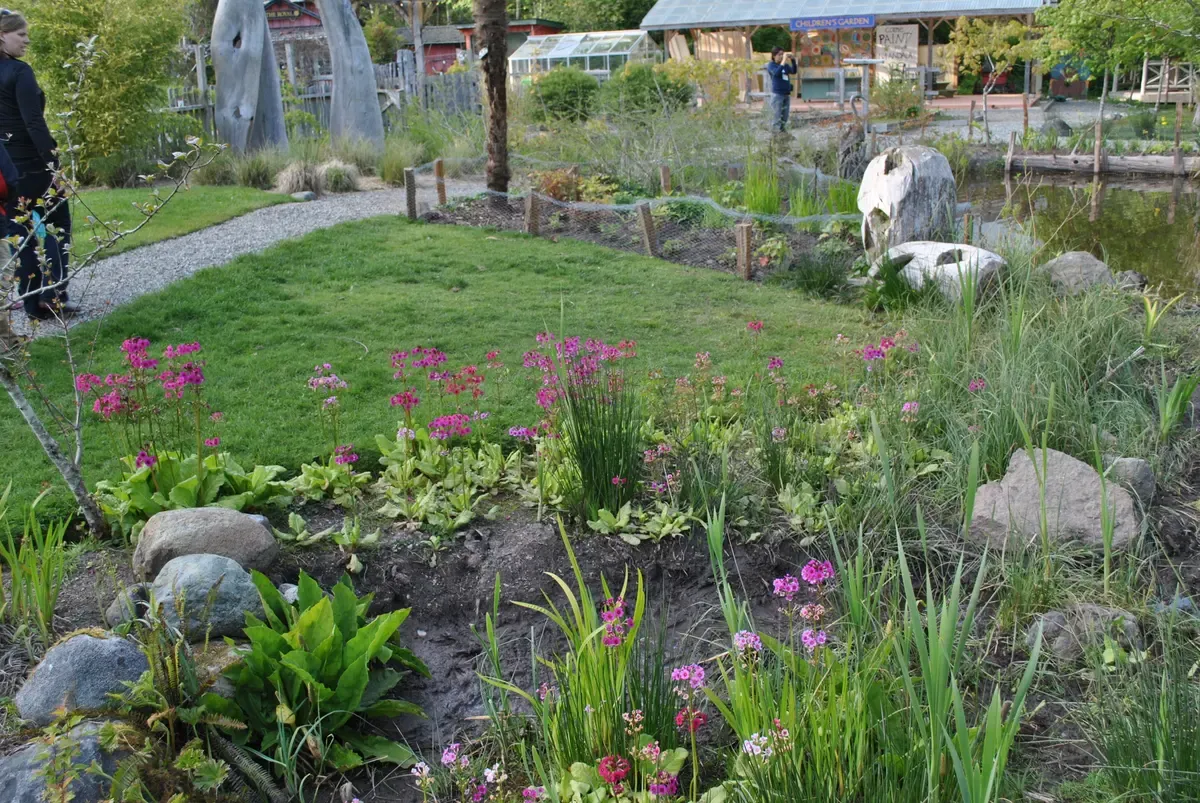
A garden pond and planted beds on the 12-acre site, photographed before its 2020s rebrand from Tofino Botanical Gardens to the Naa'Waya'Sum Coastal Indigenous Gardens. Photo: Aaron Carlson from Menomonie, WI, USA, CC BY-SA 2.0, via Wikimedia Commons
Gardens and trails
The site covers 12 acres of gardens and trails. A day pass or membership gets you onto them, and self-guided access is the base offering: you walk at your own pace with whatever interpretation is posted along the route. The setting is coastal forest and garden beds on the edge of Tofino, a short drive from the village core. There is no published plant species count and no stated walking time for the trail network, so plan by available daylight rather than by a listed loop length.
If you want more structure, the campus offers guided tours, talks and cultural programming in addition to self-guided trail access. These are where the learning focus comes through most clearly, since visitors learn about Nuu-chah-nulth art, culture and knowledge systems. Check with the campus directly about what programming is running during your visit, especially outside the main season. For more self-guided walking in old-growth forest nearby, the Rainforest Trail in the national park reserve is a good companion outing.
The pace here is different from a national park hike. There is no summit, no waterfall and no set loop distance published, so a visit succeeds on its own terms: slow walking, reading whatever interpretive signage is posted, and stopping at the pond, the beds and the shoreline edge rather than covering ground quickly. Visitors used to the open scale of Long Beach or the old-growth canopy of the Rainforest Trail should expect a smaller, more cultivated landscape here, closer to a coastal garden than a wilderness trail, even though the same rain and the same forest edge shape both.
The cafe, ecolodge and carving studio
Three operations share the campus with the gardens. The čukʷaa haʔuk café serves visitors on site, and the 15% discount attached to the annual membership applies here, which tells you the cafe is meant as part of the visit rather than an afterthought. The IISAAK Ecolodge offers accommodation on the same property, which makes it possible to wake up inside the campus rather than commute in from town. The Full Circle Carving Studio & Gallery rounds out the site, and it connects directly to the campus's purpose: working artists, Indigenous art and the knowledge systems behind it.
Practically, this means you can shape several kinds of visit out of one stop. A short visit is a trail walk and a coffee. A longer stay books a night at the ecolodge and spreads the gardens, the studio and the programming over a day or more. Anyone staying on should still confirm the seasonal status of the gardens and cafe before travelling, since the closure listing covered both. For eating elsewhere in town afterwards, our where to eat in Tofino guide covers the village options.
None of the three, the cafe, the ecolodge or the carving studio, is described by the operator as optional add-ons bolted onto a garden attraction. They read instead as the working parts of one campus, each carrying the same Indigenous-led, conservation-focused purpose as the trails themselves. A carving studio in particular signals ongoing practice rather than a static display: artists working in view of visitors, producing new pieces rather than only showing historic ones. If that working, living quality is what draws you to Tofino's Indigenous art and culture scene, pairing this stop with the Roy Henry Vickers Gallery gives you both a working artist's own gallery and a campus built around a wider community of practice.
Current pricing from the Clayoquot Campus's own listing, plus one guided option that pairs a boat day with the wider Clayoquot Sound the gardens sit beside.
Day pass, or a year of visits: which one pays off depends on how many times you will come back.
| Option | Price | Covers | Cancel | Book |
|---|---|---|---|---|
| Single Day PassA single visit during the open season. | US$7.10 (C$10.00) | The 12 acres of gardens and trails, one day | Not stated | Official site |
| Annual Adult MembershipRepeat visitors or anyone staying long enough to come back more than once. | US$56.78 (C$80.00), 50% off after Labour Day | A year of access plus 15% off at the on-site cafe | Not stated | Official site |
| Clayoquot Sound kayak tour with boat ride, 4.5 hoursVisitors who want the water side of Clayoquot Sound to go with the gardens' forest side. | $153.00 as listed by the operator | A guided paddle and boat ride through the wider Sound the gardens sit on the edge of | Per the operator's own cancellation terms | Check Availability |
Figures current in Q3 2026.
A Guided Way To See The Wider Sound
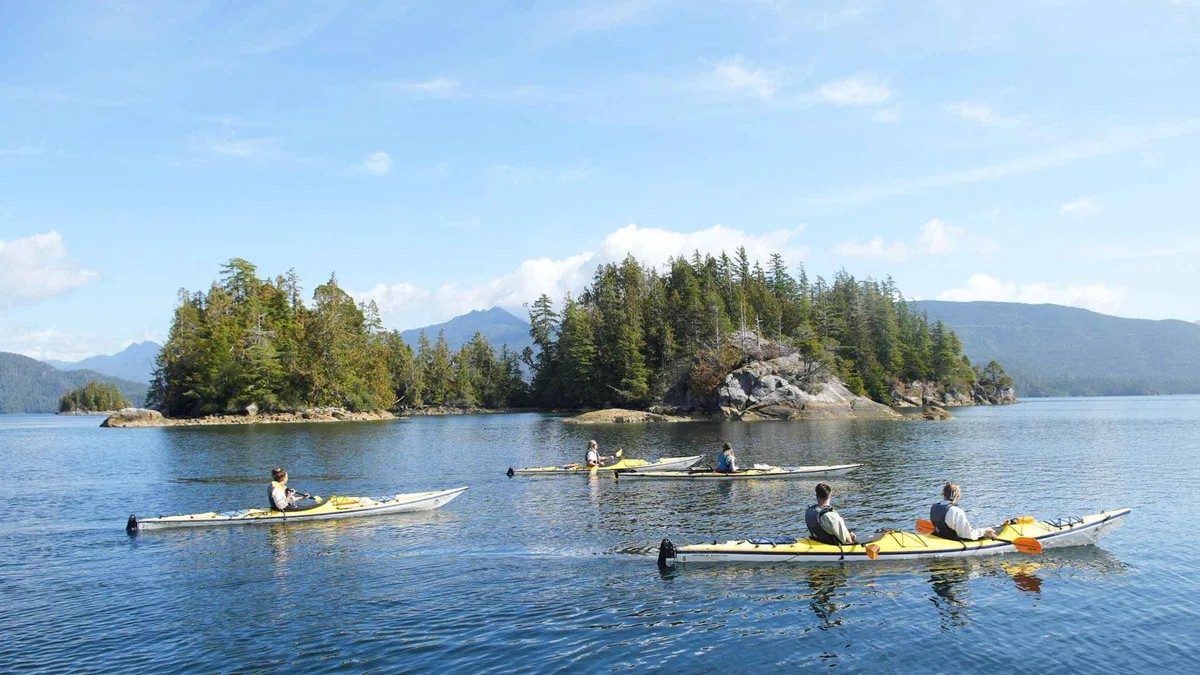
The gardens show the forest and cultural side of Clayoquot Sound. This tour shows the water side, from the same Sound the campus sits on.
 from $153.00
Tofino: Clayoquot Sound Kayak Tour with Boat Ride
A 25-minute boat ride into Clayoquot Sound to a remote floating dock, followed by a 2-hour guided kayak paddle through sheltered channels looking for seals, eagles and black bears. Children aged 6-15 must share a double kayak with a parent, and a single kayak requires the paddler to be at least 16.
Check AvailabilityPrices, ratings and details are the platform's own. Dollar figures are the listed prices. The platform bills in your account's currency.
The Gardens On Pacific Rim Highway
The 12-acre site sits on Pacific Rim Highway, a short drive from the village core.
Coordinates from OpenStreetMap.
Nearby In Tofino
Roy Henry Vickers Gallery
A gallery at 350 Campbell Street in Tofino showing the work of artist Roy Henry Vickers, combining Northwest Coast formline art with his own contemporary style. Free admission, open Monday to Saturday from 10:00 to 17:00 and Sunday from 12:00 to 17:00.
Rainforest Trail
Boardwalk loops through old-growth temperate rainforest in Pacific Rim National Park Reserve, a short drive south of the gardens on Pacific Rim Highway. A good pairing with the garden trails if you want more forest walking.
Long Beach
The longest sandy beach in the area, inside Pacific Rim National Park Reserve between Tofino and Ucluelet. Wide open sand, surf and shoreline walks, with parking and washroom facilities at the main access points.
Tofino Botanical Gardens Questions
Is Tofino Botanical Gardens still open?
The site is open to visitors but now operates as the Naa'Waya'Sum Coastal Indigenous Gardens, part of the Clayoquot Campus. At our latest check the gardens and the cafe were listed as closed for the season, and the operator has published no reopening date. Confirm status by phone at (236) 233-2518 or by email at [email protected] before you go.
What is Naa'Waya'Sum?
Naa'Waya'Sum is the current name of the gardens. It references traditional Nuu-chah-nulth cedar benches used for intergenerational knowledge sharing. The site sits in the Ha'houlthee (traditional territory) of the Tla-o-qui-aht Ha'wiih and is managed by the IISAAK OLAM Foundation.
How much does it cost to visit?
A Single Day Pass costs US$7.10 (C$10.00). An Annual Adult Membership costs US$56.78 (C$80.00), includes a 15% cafe discount, and is half price if bought after Labour Day. Admission is free for Nuu-chah-nulth citizens and for children ages 0 to 12.
Do I need to book tickets in advance?
No advance booking is stated as required. Tickets can be bought on arrival, or you can show proof of purchase at check-in if you bought ahead.
What is there to do on the site besides walk the trails?
The 12 acres of gardens and trails are the core visit, but the campus also includes the čukʷaa haʔuk café, the IISAAK Ecolodge and the Full Circle Carving Studio & Gallery. Guided tours, talks and cultural programming are offered in addition to self-guided access, with a focus on Nuu-chah-nulth art, culture and knowledge systems.
Can I still call it Tofino Botanical Gardens?
The name in wide use, including in search results and older guidebooks, is still Tofino Botanical Gardens, and that is why this page is titled around it. On the ground and on the operator's own site, though, the current name is the Naa'Waya'Sum Coastal Indigenous Gardens, part of the Clayoquot Campus. Staff and signage on site are likely to use the new name, so expect that when you arrive.
Is the site run by a First Nation?
It sits within the Ha'houlthee (traditional territory) of the Tla-o-qui-aht Ha'wiih. Day-to-day management is with the IISAAK OLAM Foundation, and ownership is with the Clayoquot Indigenous Conservation Innovation Centre (CICIC), a satellite of the Pacific IPCA Innovation Centre. Clayoquot Sound around Tofino is shared territory among the Tla-o-qui-aht, Ahousaht and Hesquiaht First Nations and became a UNESCO biosphere region in February 2000.
We may earn a commission if you book through one of our links, at no extra cost to you. Full affiliate disclosure