 Tofino City Guide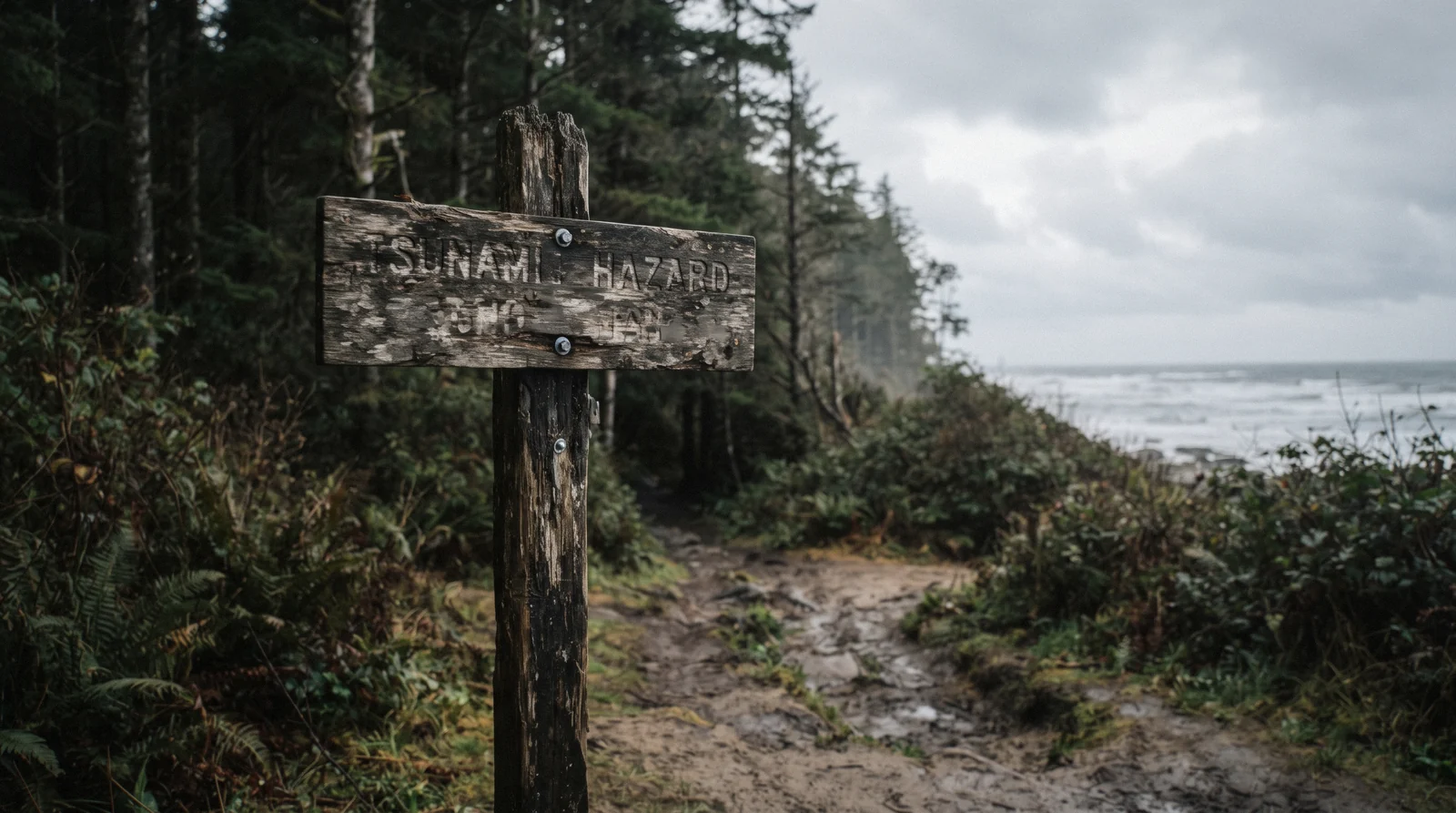
Is Tofino Safe? Hazards, Hospitals and Cell Service
Is Tofino safe? Yes, for a small, well-serviced town where most visits pass without incident. The real risks here are not crime but nature: rip currents at the beaches, cold Pacific water, earthquake and tsunami exposure on an open coast, wildlife in the forest, and long stretches of single highway with patchy phone coverage. None of these should stop you coming, and none of them are unique to the Tofino city guide homepage's wider picture of the town. Each has straightforward, official guidance, and this page walks through all of it so you can plan with clear eyes rather than guesswork.
Quick answer Short answer: yes, Tofino is safe for visitors who understand the beach and coastal risks
Yes. Tofino is a safe destination for most travellers. There is a 24-hour emergency department at Tofino General Hospital, and the main hazards are environmental rather than human. There have been no lifeguards at any Pacific Rim or Tofino-area beach since 2012, so swimming and surfing are unsupervised. Rip currents, tides and rolling beach logs are the hazards Parks Canada names for these beaches. On the coast, tsunami awareness matters: know the natural warning signs and where high ground is. Before you drive in, check the Nanaimo to Tofino route for road conditions and skim our Tofino beaches guide to pick a beach that suits your swimming confidence.
Key takeaways
- Tofino General Hospital runs a 24-hour emergency department, and 911 covers any emergency.
- Every beach is unsupervised. No lifeguards have been on duty since 2012.
- Rip currents are the main water hazard. Swim parallel to shore to escape one, never against it.
- If the ground shakes hard or the ocean behaves strangely, move to high ground immediately without waiting for an alert.
Rip Currents, Cold Water and No Lifeguards
The ocean is the most likely place for something to go wrong in Tofino, and the three facts to hold onto are that the water is cold year-round, rip currents are a genuine hazard, and nobody is watching from a tower.
No lifeguards since 2012
Start with the lifeguards, because it changes how you should treat every beach. There have been no government-funded lifeguards or Surf Guards at Long Beach or the other Pacific Rim beaches since 2012, when federal funding for the decades-old service ended. Parks Canada's own current guidance states that its beaches are unsupervised.
A community group, the Tofino Surf Lifesaving Club, has formed to campaign for volunteer beach ambassadors and eventually paid seasonal lifeguards, but no lifeguard service has been reinstated. The practical meaning: if you get into trouble in the water, your safety depends on your own skills and the people with you. Swim with others, stay within your depth, and watch the water for a few minutes before entering.
Rip currents and beach logs
Parks Canada names rip currents as a main hazard for swimmers and surfers on these beaches, alongside tides and rolling beach logs. A rip current is a narrow channel of water flowing out to sea. It will not pull you under, but it can carry you away from shore faster than you can swim back against it.
The standard escape technique is to stay calm, float, and swim parallel to the beach until you are out of the current, then angle back to shore. Never fight the current head on. Rolling logs are an underrated danger: a large floating log in the surf zone can weigh tons and crush anyone in its path, so keep off logs near the waterline when waves are running.
Cold water changes the math
The Pacific off Vancouver Island is cold in every month of the year. Cold water saps strength quickly and turns a long swim into a serious event, which is one reason surfers here wear thick wetsuits in all seasons. If you are new to surfing or cold-water swimming, take a lesson with a local school and stay at patrolled-by-peers, busy sections of beaches such as Chesterman Beach or Cox Bay.
Quieter spots like Tonquin Beach and Mackenzie Beach are lovely, but the same unsupervised rules apply. Posted signs at beach entrances carry local hazard information. Read them every time, because conditions shift.
Choosing a safer beach
Beach choice matters for safety. Wide, gently sloping sand with lots of other surfers gives you more people to notice trouble and usually softer conditions than a narrow cove taking the full swell. None of Tofino's beaches carry a lifeguard rating from any authority, so this is a judgement call rather than an official grading, and posted signage at the entrance is the only on-site guidance you will find.
Read our Tofino beaches guide for the character of each beach, and if you are building a whole trip around the water, our things to do page covers surf lessons and rentals, which is the fastest way for a first-time visitor to learn the local conditions from someone who reads them daily.
Tsunami Risk and Evacuation
Tofino faces the open Pacific on an active coast, so tsunami preparedness is part of civic life here. The District takes it seriously and publishes its own guidance, and a visitor who knows three signs and one rule is well covered.
The three natural warning signs
The District of Tofino lists three natural warning signs of a tsunami: strong or prolonged ground shaking, unusual ocean behaviour such as water rapidly receding or surging, and a loud roar from the ocean. The official instruction is to evacuate to high ground immediately on any of these signs. Do not wait for an official alert, and do not go down to the beach to look.
Stay on high ground until officials declare it safe to return.
Timing and alert channels
A local tsunami can reach Tofino's shoreline within 15 to 30 minutes of the triggering earthquake. That is why the guidance centres on the natural signs rather than waiting for notifications. If alerts do reach you, they come through several channels at once: sirens, the Voyent Alert! system, local radio and the BC Emergency Alert System.
A siren is not the only channel, so never rely on hearing one. Signing up for Voyent Alert! before your trip is a sensible step for visitors as well as residents.
Know your route before you need it
The District publishes an official Tsunami Safety Guide and Evacuation Map showing hazard zones and safe assembly areas. If you are staying near the water in the low-lying part of town, look at the map once on arrival and note the nearest route uphill. Most accommodation providers know their evacuation route and many display it.
The short version for a visitor: if the ground shakes hard or for a long time, walk inland and uphill right away, and take others with you. For more on where neighbourhoods sit relative to the water, see our Tofino map.
Hospital and Emergency Contacts
Medical care in Tofino is small-town care, but it is real, round-the-clock emergency care, and the basics fit on one screen.
Tofino General Hospital
Tofino General Hospital sits at 261 Neill Street and is operated by Island Health. It is open 24 hours a day, 7 days a week for emergencies, and the hospital's phone number is 250-725-4010. For any emergency, call 911 first, since dispatch can route an ambulance or coordinate with the hospital faster than a direct call can.
For anything short of an emergency, phone the hospital first rather than showing up and hoping for a walk-in slot. It is the only hospital serving Tofino and the surrounding Pacific Rim area, so treat it as the one fixed point in any medical plan for the trip.
Remote-town realities
Because Tofino is at the end of a long road, serious trauma or complex cases can require transfer to a larger hospital elsewhere on Vancouver Island. That is not a reason to avoid the town. It is a reason to give your itinerary a cushion.
Carry any regular medications with you rather than in a checked bag, and know that Pharmasave Tofino at 131 First Street, phone 250-725-4949, can handle common prescription needs in town. For the drive itself, see our Nanaimo to Tofino guide.
What to save in your phone
Save three things in your phone before you arrive: 911 for any emergency, 250-725-4010 for the hospital, and your accommodation's address written down, not just bookmarked. If your phone battery dies on a dark beach, a written address is what you will need to give a taxi driver or a responder. A paper note in a wallet or a photo saved to your phone's lock screen works just as well as a bookmark that needs a live connection to open, and it is worth doing this on arrival day rather than waiting until it matters.
Wildlife on the Trails
Bears, wolves and cougars live in the forests around Tofino. Encounters are rare and the standard precautions are simple, well-established backcountry habits.
What the park actually says
Parks Canada's guidance for Pacific Rim National Park Reserve does not publish specific encounter statistics or numeric warnings for this area. Its hiking page points visitors to general wildlife-safety guidance and to current trail conditions rather than a running count of sightings or incidents. The honest summary is that black bears, wolves and cougars are present in the coastal forest, most visitors never see one, and the standard practice is what keeps it that way.
Trail closures do happen when a specific concern arises, which is exactly why checking current trail conditions before a hike matters more than any general statistic would.
Standard practice, plainly
The habits that apply anywhere in bear and cougar country apply here. Store food securely and never leave it unattended at a beach picnic or campsite. Make noise on trails so animals hear you coming and move off.
Hike in groups where you can. Never approach or feed wildlife, and keep a wide berth if you see an animal at a distance. If you walk with a dog, the park's own rule is that dogs must be kept close and on a leash at all times, including on beaches, trails, in parking lots and in the water.
The District of Tofino requires leashes on all town beaches too, which also protects the migratory shorebirds that rest there.
Where these rules matter most
If your trip is trail-heavy, our Tofino hikes guide covers the main routes including the rainforest loops in Pacific Rim National Park, and our things to do page covers guided options where a local interpreter handles the wildlife conversation for you. A guided walk or boat trip is also the easiest way to get a current read on conditions from someone out on the trails every day, rather than relying on a static rule list, and it is worth the small extra cost on a first visit if wildlife is a real concern for your group.
Highway 4 and Cell Service
The drive in is the part of a Tofino trip where preparation pays off most, because the road is long, the coverage is uneven, and the terrain is mountain rainforest.
The road itself
Highway 4 is the only road into Tofino, running from Port Alberni across the island's mountainous spine. The Kennedy Hill safety improvement project, which caused years of single-lane alternating traffic and scheduled closures, is complete. It finished in spring 2023.
However, the province still schedules short-term maintenance closures on the highway from time to time, and these can add hours if you arrive at the wrong moment. Check DriveBC before you leave and again before the Port Alberni stretch. Our getting around Tofino page covers the last leg once you arrive, and the drive from Nanaimo covers the route in detail.
Cell service, honestly stated
Cell coverage along Highway 4 is commonly reported as inconsistent. There is no official DriveBC or telecom map that documents specific no-coverage stretches of the route, and we will not name one, because none exists in an official form. The practical advice stands regardless of where the gaps fall: download offline maps before leaving Port Alberni, fill the fuel tank there, carry water and warm layers, and tell someone your expected arrival time.
If you break down outside coverage, staying with your vehicle is the standard advice on remote roads.
Once you are in town
In town itself, coverage and services are normal for a small Canadian town, and the weather is mild year-round even when wet. Our Tofino weather page covers seasonal patterns, and winter storm season brings its own driving considerations on the highway, since the same rain that draws storm watchers also means wet pavement and reduced visibility on the drive in. If you are budgeting the whole trip including the drive, our Tofino costs page has the numbers, and our plan hub ties the logistics together with everything else you need to decide before you leave.
Plan the Rest of the Trip
Safety is one thread of a good Tofino plan. These pages carry the rest.
Tofino Trip Planning
Build the trip from scratch with our complete planning guide, from when to go to what to book first.
Tofino Beaches
Compare every beach in and around town and pick the right one for your swim or surf level.
Nanaimo to Tofino
The full drive-in route, ferry timing and where the long road gets remote.
Tofino Map
See where beaches, the hospital and your accommodation sit relative to each other and to high ground.
Getting Around Tofino
Walk, drive, bike or bus once you are here, including parking realities.
Tofino Safety: Questions
Is Tofino safe for solo travellers?
Yes. Tofino is a small town with a settled visitor economy, and the risks to plan for are environmental rather than social. A solo traveller's main precautions are the same as anyone's: swim within your abilities at unsupervised beaches, know the tsunami signs, and drive Highway 4 with offline maps and a full tank.
How real is the Tofino tsunami risk?
Tofino's coast faces the open Pacific and the District treats tsunami preparedness as routine. A local tsunami can reach the shoreline within 15 to 30 minutes of its triggering earthquake. Learn the three natural warning signs, strong or prolonged shaking, unusual ocean behaviour, and a loud ocean roar, and know that the correct response is to move to high ground immediately without waiting for an alert.
Can I dial 911 from Tofino?
Yes. 911 is the emergency number for any situation. Tofino General Hospital at 261 Neill Street operates its emergency department 24 hours a day and can be reached directly on 250-725-4010.
Do I need to worry about bears or wolves in Tofino?
Black bears, wolves and cougars are present in the area, but encounters are uncommon and Parks Canada publishes no numeric warning for these trails. Standard practice covers it: store food securely, make noise while hiking, never approach or feed wildlife, and keep dogs leashed, which is also a park rule.
Will my phone work on the drive to Tofino?
Coverage on Highway 4 is commonly reported as inconsistent, and no official map of specific dead zones exists. Download offline maps before leaving Port Alberni, fuel up there, and let someone know your expected arrival. In town, service is normal for a small Canadian community.
Tofino Safety on Film
Two videos on the District's tsunami preparedness work.
High Ground Hike: Tsunami Preparedness
A look at the District's high-ground routes and tsunami preparedness messaging for the Tofino area.
Video: YouTubeTofino Needs Vertical Evacuation Towers for Peak-Tourist Season, Finds Report
Local news coverage of Tofino's tsunami evacuation planning during high-visitor periods.
Video: YouTube news coverageVideos load from YouTube only when you press play.
Prices, hours and terms are set by the venue or operator and confirmed at checkout.
We may earn a commission if you book through one of our links, at no extra cost to you. Full affiliate disclosure