 Tofino City Guide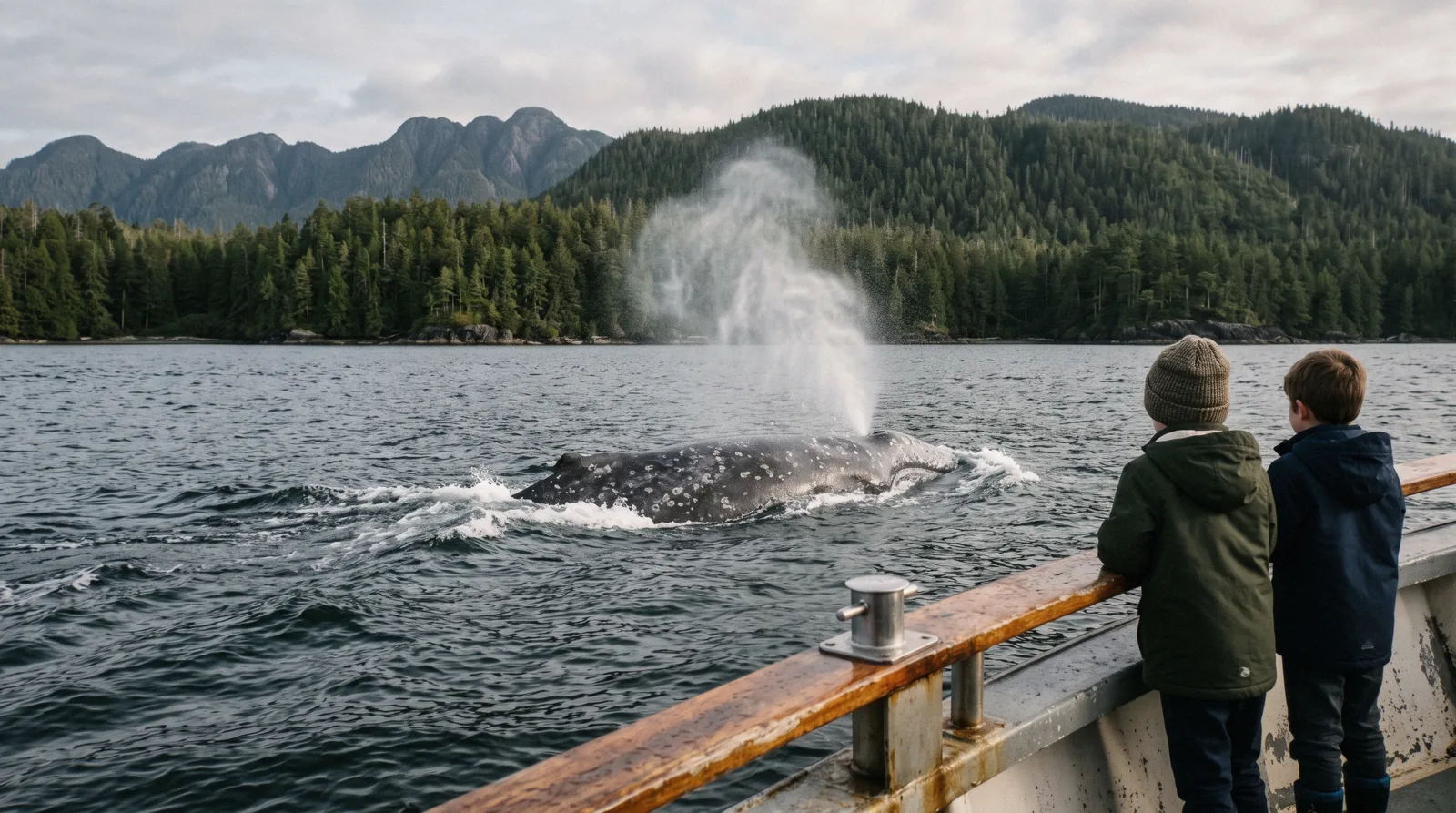
Best Time to Visit Tofino
Tofino does not really have an off season. It has a wet season and a less wet season, a whale migration that peaks in spring, a summer that locals guard jealously, and a stretch of autumn and winter when the storms become the attraction. The honest answer to the best time to visit Tofino depends on what you want to do once you are here, because the same month that empties the beaches fills the surf breaks. This page walks through the year season by season, using the official Canadian climate normals for the Tofino A weather station, the published Pacific Rim Whale Festival dates, the national park fee schedule and the operating windows that tour operators actually publish. Where a number does not exist, we say so rather than guess. For the full month by month breakdown of temperature and rainfall, see our Tofino weather guide. For everything else on the coast, start from the Tofino City Guide homepage and plan from there.
Quick answer The season-by-season call, whales, weather and the honest caveats
For most travellers the best time to visit Tofino is late spring through early autumn. August is the warmest month with an average daily high of 19.1°C (66°F), and July is the driest with just 71.0 mm of rain. Whale watching peaks from late March to April, when more than 20,000 grey whales pass the coast and the Pacific Rim Whale Festival runs across Tofino, Ucluelet and the national park. The festival runs 14-21 March 2026 and 13-20 March 2027. Winter, from October to March, is the wettest stretch and the time when storm watching and winter surfing bring their own visitors. Read the season by season guide below, browse things to do in Tofino for trip ideas, or jump straight to the whale watching tours that run through the migration.
Key takeaways
- Whale watching peaks late March-April; see the whale watching tours and the Pacific Rim Whale Festival dates
- For the full month-by-month rain and temperature figures behind this page, see Tofino weather
- Start planning from the Tofino city guide homepage, or go straight to things to do in Tofino
Tofino Season By Season
Every season in Tofino has a different rhythm. Here is what the weather does, what is actually running, and what you need to plan ahead for in each one. The temperature and rainfall figures come from the Environment and Climate Change Canada 1981-2010 normals for the Tofino A station, and the activity notes come from the published calendars of the festival, the park and the tour operators themselves.
Winter (December to February)
Winter is the wettest and quietest stretch of the Tofino year. Average daily highs sit around 8.1°C in December and 8.3°C in January, with overnight lows near 2°C, and the rain is serious: January averages 486.6 mm, February 336.1 mm and December 440.0 mm. Most of Tofino's yearly total of 3,270.7 mm falls between October and March.
That rain is exactly the point for many winter visitors, because this is the heart of storm watching season, when the Pacific weather systems arrive and people book front-row seats to watch them. It is also winter surfing season, and the cold-water crew treats these months as prime time. Not everything closes.
The Tofino Covered Boat Winter Wildlife, Otters + Islands Tour was built for exactly these conditions, running two hours through Clayoquot Sound on a covered 12-passenger boat so you stay dry while looking for sea lions, seals, otters and eagles. Tickets cost $101.00. A resident group of grey whales, the Pacific Coast Feeding Group, stays off this coast year-round, so whales are not absent in winter even though the great migration has not started.
The migration itself begins in late February, so a late winter trip can catch the first passing whales. For indoor options on the wettest days, see our rainy day guide.
Spring (March to May)
Spring is when Tofino's most famous natural event happens. The grey whale migration runs from late February through May, with the peak in late March and April, when more than 20,000 whales pass along this coast on their way north. It is the single best window for whale watching, and the town organises itself around it: the Pacific Rim Whale Festival runs 14-21 March 2026 and 13-20 March 2027, spread across Tofino, Ucluelet and Pacific Rim National Park Reserve (see the official festival site for the full program), with the Parade of Whales & Wonder, Maritime Kids Days, a closing Baleen Bash and whale-watching departures from local operators.
The weather improves gradually. Average daily highs climb from 10.1°C in March to 11.9°C in April and 14.5°C in May, while rain falls from 329.8 mm in March to 269.9 mm in April and 153.0 mm in May. Pack layers and a real rain jacket anyway.
Spring is also when the seasonal tour calendar reopens: the Clayoquot Sound Wildlife Safari Boat Tour, a three-hour RHIB safari limited to 8 guests, runs from May 1 to September 30. On land, the Pacific Rim National Park day pass costs US$8.69 (C$12.25) per adult in every season, so there is no cheaper month to enter the park. If you time your trip to the festival, book accommodation and tours early, since the migration peak draws visitors from both towns.
Summer (June to August)
Summer is the season the postcards come from. July and August bring the warmest weather of the year, with average daily highs of 18.9°C and 19.1°C respectively, overnight lows around 10.5°C to 10.8°C, and by far the least rain: 71.0 mm in July and 88.1 mm in August, against a November high of 492.1 mm. June is nearly as kind at 16.8°C and 129.7 mm.
This is the time for long beach days, camping, and exploring Pacific Rim National Park at its most accessible. One thing to know before you go: there have been no lifeguards on any Tofino-area beach since 2012, in any season, so the water is entirely your own responsibility. The full seasonal tour programme runs now.
The Clayoquot Sound Wildlife Safari operates until September 30, and the whale watching tour with a nature guide runs its 2.5-hour trips toward Flores, Vargas and Long Beach, where the operator reports a 95% sighting success rate for grey whales, humpbacks and orcas. That tour costs $136.00 and includes a free raincheck if no whales appear. In town, the Tofino Market runs every Saturday from May 9 through Thanksgiving weekend 2026, from 10:00 to 14:00 on the Village Green, and the gardens at the Naa'Waya'Sum Coastal Indigenous Gardens sell a Single Day Pass for US$7.10 (C$10.00) within their seasonal window.
If you plan to camp, sort your Tofino camping plans well ahead, and the seasonal picture only gets busier from here.
Fall (September to November)
Fall is the shoulder season that turns into the storm season, and it happens fast. September still feels like summer, with an average daily high of 17.8°C and 132.8 mm of rain, and the Clayoquot Sound Wildlife Safari runs to the end of the month. The Kwisitis Visitor Centre in the national park keeps daily hours of 9:30 to 16:30 from September 1 to October 12 in 2026, though note it closes September 16 to 25 that year for a cultural observance, and its winter hours are not published, so check before you go if you are visiting later.
October changes character. The high drops to 13.6°C, rain jumps to 341.9 mm, and November becomes the wettest month of the year at 492.1 mm with a high of 10.0°C. This is when the storm watching season begins in earnest, and the same weather that empties the beaches draws a dedicated crowd of storm watchers and winter surfers. The Tofino Covered Boat Winter Wildlife tour is built for these wet days, keeping you dry on a covered boat through Clayoquot Sound.
In town, the Tofino Market runs to Thanksgiving weekend, and the Naa'Waya'Sum gardens discount their US$56.78 (C$80.00) annual membership by 50% after Labour Day, a small sign of the seasonal shift. There is no published statistic on visitor volume or hotel prices by month for Tofino, so we will not invent one. What the calendars do show is that fall is a transition: tours wind down, the park quietens, and the storm season ramps up.
For what to do between squalls, see our rainy day guide and our guide to storm watching in Tofino.
Tofino By Season Compared
This table puts the four seasons side by side so you can match your travel dates to the weather, the rainfall and the tours and events actually operating.
| Season | Avg high | Rain | What's running |
|---|---|---|---|
| Winter (Dec-Feb) | 8-9°C | Wettest, roughly 336-487 mm per month | Storm watching and winter surf season. The covered boat winter wildlife tour runs for wet days, and the grey whale migration starts in late February |
| Spring (Mar-May) | 10-15°C | Falling, from 330 mm in March to 153 mm in May | Migration peak in late March-April with over 20,000 grey whales, and the Pacific Rim Whale Festival mid-March. The Clayoquot Sound wildlife safari starts May 1 |
| Summer (Jun-Aug) | 17-19°C | Driest, from 71 mm in July to 130 mm in June | Warmest and driest months. The Clayoquot Sound safari runs to September 30, whale watching departs daily, Tofino Market every Saturday to Thanksgiving |
| Fall (Sep-Nov) | 10-18°C | Rising fast, from 133 mm in September to 492 mm in November | Safari runs to September 30, Kwisitis autumn hours to October 12, then storm watching season begins |
Temperature and rainfall figures are the Environment and Climate Change Canada 1981-2010 climate normals for the Tofino A station. Activity notes are our own read of the published Pacific Rim Whale Festival dates, the Kwisitis Visitor Centre calendar and the operators' own seasonal windows. Figures current in Q3 2026.
Planning Around The Seasons
A few practical points that change depending on when you arrive.
What costs the same all year
The Pacific Rim National Park day pass costs US$8.69 (C$12.25) per adult in every season. There is no seasonal discount stated, so visiting in the wettest November week saves you nothing at the park gate. The same logic applies to the beaches in one specific way: there have been no lifeguards on any Tofino beach since 2012, in any season, so the safety picture does not improve in summer.
Where seasons genuinely change what you pay or access is the tour calendar and opening hours. The Clayoquot Sound wildlife safari simply does not run from October to April, and the Kwisitis Visitor Centre publishes hours only for part of the year. If a specific tour or facility is the reason for your trip, check its window before you book your dates, and browse our full Tofino tours listings for what runs when.
Choosing between the two Tofinos
It helps to think of Tofino as two destinations sharing one postcode. The summer Tofino is about beaches, calm mornings on the water, the Saturday market and the driest weather of the year. The winter Tofino is about storms, big surf, covered-boat wildlife trips and a coastline showing its force.
Both are legitimate ways to visit, and both have tours built for them. The overlap months, March to May and September to October, give you a blend: the migration and the festival in spring, warm days and rising rain in early fall. Whichever direction you lean, our where to stay guide covers the neighbourhoods, and the Tofino City Guide homepage links everything else.
One honest caveat for your planning: no official visitor-volume statistic or month-by-month hotel price data is published for Tofino, so claims about a single cheapest or busiest month are not something we can back with numbers. What we can say is what the calendars show: the whale festival dates are fixed, the safari season has firm start and end dates, and the wettest and driest months are a matter of record.
Tofino's Signature Season On Film
Two videos of the whale watching that defines Tofino's spring and summer season.
Tofino Whale Watching Tours | Ahous Adventures | Gray Whales, Humpbacks & Orcas | March - October
Grey whale, humpback and orca watching off Tofino, the spring-through-autumn trip.
Video: Ahous AdventuresGray whale watching in Tofino
Grey whales surfacing close to a Tofino tour boat.
Video: The GlobetrottersBest Time to Visit Tofino Questions
What is the driest month to visit Tofino?
July. It averages just 71.0 mm of rain, the lowest of any month, with an average daily high of 18.9°C. August is close behind at 88.1 mm and is actually the warmest month at 19.1°C. For the full monthly figures, see our Tofino weather guide.
When is the best time to see whales in Tofino?
The grey whale migration runs from late February to May, with the peak in late March and April, when more than 20,000 whales pass the coast. The Pacific Rim Whale Festival sits in that window, running 14-21 March 2026 and 13-20 March 2027. A resident Pacific Coast Feeding Group also stays off the coast year-round, so whales are possible in any month.
Is winter worth visiting Tofino?
If storm watching or winter surfing is what you are after, winter is the season for it. The wettest months, October to March, are exactly when storm watching and winter surf draw visitors. Winter-specific options exist too, such as the covered boat winter wildlife tour through Clayoquot Sound, and resident grey whales stay offshore all year. Expect rain, with December averaging 440.0 mm.
What is the cheapest month to visit Tofino?
There is no official visitor-volume or hotel-price-by-month statistic published for Tofino, so no month can honestly be named the cheapest. What the records do show is that the national park day pass costs the same US$8.69 (C$12.25) all year and that some seasonal tours pause in winter, which changes what is available rather than what it costs.
When do the seasonal tours stop running?
Windows vary by operator, so check before booking. The Clayoquot Sound Wildlife Safari Boat Tour runs May 1 to September 30 only. The covered boat winter wildlife tour is built for the wet months. The whale watching tour with a nature guide operates through the year's main season, and cancellations on it are free up to 24 hours before departure.
We may earn a commission if you book through one of our links, at no extra cost to you. Full affiliate disclosure